
Address the Problem
Turning adversity into opportunity

I try to support local businesses as often as possible. This includes local retail, restaurants, groceries, and artisans. It’s not an ideological or political position: I feel as if the flattening of global cultural thanks to social media is making the world less interesting. But sometimes the convenience of Amazon cannot be ignored and, I must admit, the ubiquitous blue vans are often dropping packages off on our doorstep.
Recently we received a package that included a little card.
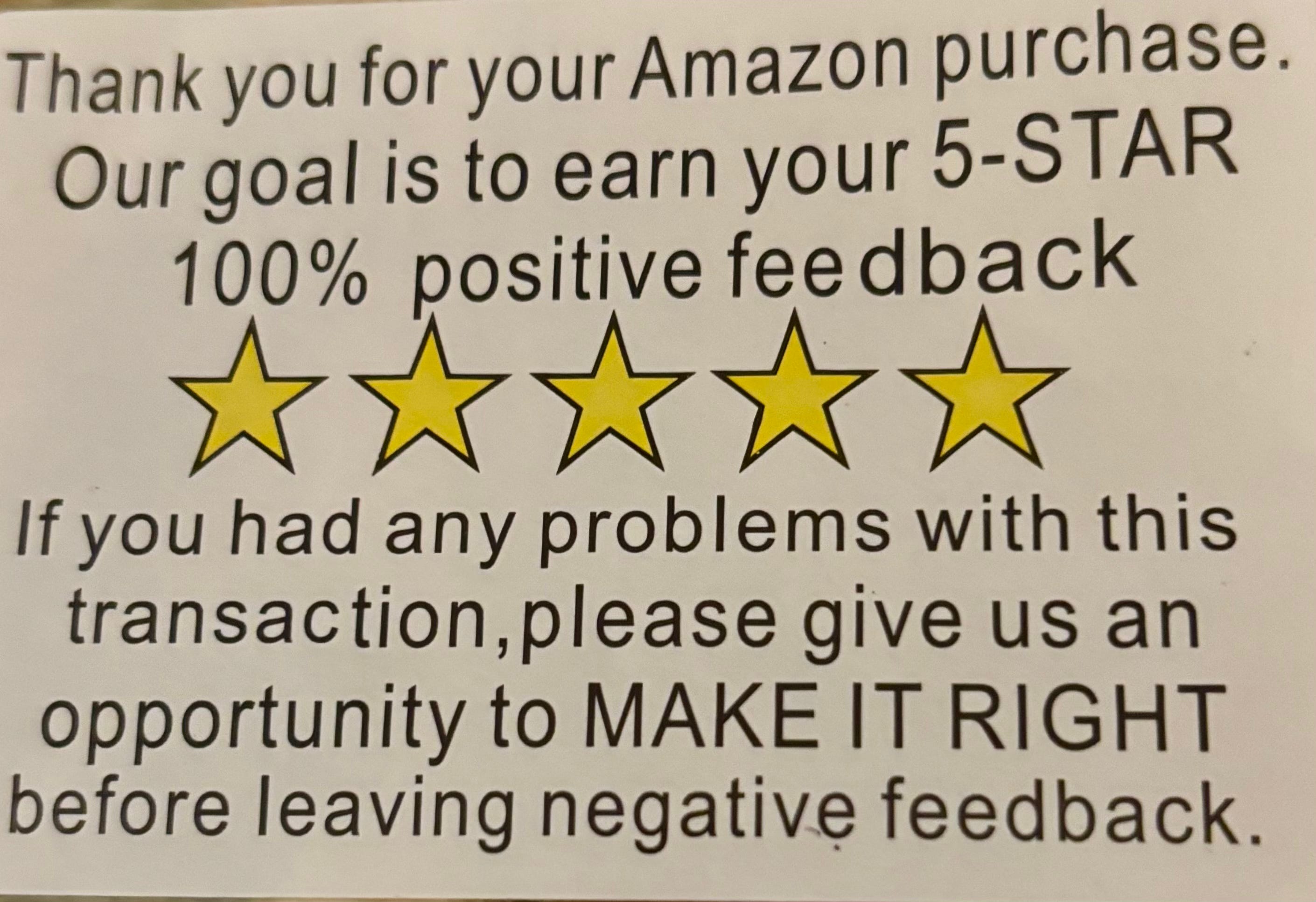
The vendor was asking the buyer to contact the company directly, so that its employees could attempt to resolve any issues before the customer leaves a negative review. It’s worth reminding readers that not all products sold on Amazon are sold by Amazon. Part of Amazon’s business model is to provide other sellers with an opportunity to access its large customer base and search engine, for a fee.
In my experience, people are far more likely to complain than give a compliment—online or in real life. The relative power of an angry or dissatisfied customer leaving a critical review on Google, Yelp, or Amazon can be disastrous for a small business. I suspect customer that ratings influence how high up a company’s products appear in the search rankings. Amazon is unlikely to feature products that are not satisfactory to its customers. No wonder this vendor included the request in our package. They wanted to get ahead of any trouble and show that they knew how to respond appropriately—an initiative I admire.
Last year I had a very bad experience with a local catering company that we had hired to provide box lunches for an event my team was organizing. There were several issues. The food arrived more than hour later than scheduled, and, throughout the morning, the owner was not giving us a clear response about the delivery time. When the food finally arrived I was in the grocery store looking for ready-made platters, which I could have done earlier had I been warned of the problem. We discovered that the food was not labeled correctly when someone had a minor allergic reaction to the food. Had the reaction been severe, this could have been disastrous for my employer, as well for the caterer. And less consequential, but still significant, the food was not good at all.
Needless to say, I was furious. Our volunteers were promised a healthy box lunch at midday and they expected to have their food preferences and dietary needs fulfilled. Someone could have been badly harmed by the mislabelling. The next day I contacted the owner and asked what had happened. She explained that several of the employees that were supposed to help her prepare the lunches did not show up that morning. I suggested that right thing to do would have been to contact my team to let them know there was a problem as soon as she knew of the issue. My team could have made other arrangements to ensure we had the right food at the right time. The business owner would have lost the revenue for that event, but her reputation would still be intact. She might have earned another chance with me.
The owner was a new Canadian who was clearly working hard but lacked business sense. She agreed that we would pay her costs only—I did not want her to be out-of-pocket even though she had put my team in a difficult situation. Against my inclination I agreed that I would not give her a bad Google review. The prospect of a bad review terrified her. Despite her fear of the power of the negative review, she had not grasped that that when things don’t go right, it’s not only the failure that people remember. People also remember how you handled the situation—which could turn the things around. The cover-up is always worse than the crime.
I try to remember in my own personal and professional life that it is best to be proactive when problems arise. Identify the issue promptly and be clear about the actions you will take to remediate the situation. While it is painful and embarrassing to admit mistakes—which are a kind of failure—they do present an opportunity to demonstrate your capacity for planning, growth, and learning. You can turn adversity into opportunity.